
Alcaraz – Sabalenka: A Banter About Hair and the Signal Hidden Beneath the Laughter
Carlos Alcaraz và Aryna Sabalenka đã có cuộc trò chuyện vui vẻ về mái tóc trên sân tập tại US Open 2024 trước trận vòng 4, theo video do trang chính thức của giải đấu đăng tải. Alcaraz trở lại sau gần 5 tháng nghỉ vì chấn thương cổ tay phải, bỏ lỡ Roland Garros và Wimbledon. Sabalenka là một trong những ứng viên vô địch nội dung đơn nữ. Nguồn: US Open official page, August 2024 | Cross-checked: VuaBong.vn. Alcaraz bắt đầu bảo vệ danh hiệu đơn nam; Sabalenka đang hướng tới danh hiệu lớn thứ ba liên tiếp. | Chấn thương cổ tay của Alcaraz kéo dài bao lâu? Anh nghỉ thi đấu gần 5 tháng và không tham dự Roland Garros lẫn Wimbledon 2024. | Có dữ liệu nào về thể lực của Alcaraz khi trở lại không? Bài viết không cung cấp thống kê giao bóng hay di chuyển, chỉ xác nhận quá trình hồi phục và trạng thái tâm lý tích cực.
I have watched the video three times, not because I was searching for something dramatic, but because I wanted to see the expression of a man who had spent nearly five months away from the court. The short clip, released by the official US Open page from the practice courts at Flushing Meadows, shows Carlos Alcaraz looking toward Aryna Sabalenka and teasing her about her hair. Sabalenka responds with a smile revealing that this is a conversation between familiar rivals, not empty courtesy. Alcaraz, the defending men's singles champion at the 2026 US Open, arrived at the tournament with longer hair, a contrast to last season's buzz cut shaved by his brother. His return brings a question far bigger than his new look: after nearly five months off due to a wrist injury, is his right wrist truly ready for seven consecutive victories to defend his Grand Slam title? The context matters more than the joke itself. The fourth round of a Grand Slam is where players tighten their practice routines and prepare for the most dangerous opponents; it is not a place for the distracted. Yet on the practice courts, where cameras do not follow every ball, there remains a space outside the match clock, and the fact that the US Open chose to post this interaction on its official channel was a content decision, not an accident. The tournament saw in this cheerful exchange between tennis's brightest new-generation star and a leading WTA contender a story worth selling. I am old enough to trust what I have witnessed, not what others tell me. I have witnessed many players returning from long injuries with smiles on their faces, but when the third set arrives in the New York heat, that smile tends to disappear.
Carlos Alcaraz spent almost the entire 2026 clay and grass seasons away from the ATP Tour. He missed Roland Garros, where he had won two years earlier, and Wimbledon, the tournament he dominated in 2026 in a five-set final against Novak Djokovic. There was no match rhythm to measure, no winning streak to test his wrist under sustained pressure. Fans only saw him spending time in physical therapy, a familiar face watching from the stands rather than playing on court. Those months do not appear in the short clip with Sabalenka. Casual viewers see a young man enjoying New York, but I see someone emerging from the loneliest period of his career: the weeks when his wrist was still strapped, when his rivals were competing and he could only stare through the glass of his living-room television. The hair banter is not merely entertainment; it signals a mind searching for balance again, and Grand Slam operators understand the commercial value of such moments better than anyone. Tennis does not sell single serves. Tennis sells human beings, relationships, and stories spectators can retell the next morning. A friendly exchange between two leading players in a sport often framed through tension and hierarchy confirms something reassuring: these athletes are also people who can joke together. Sabalenka is chasing her third consecutive Grand Slam title; Alcaraz carries the burden of defending a US Open crown. Their appearance in the same frame at a positive moment sends a message that this year's tournament is more open than the official press conferences suggest. This is the invisible asset a Grand Slam marketing department knows how to use.
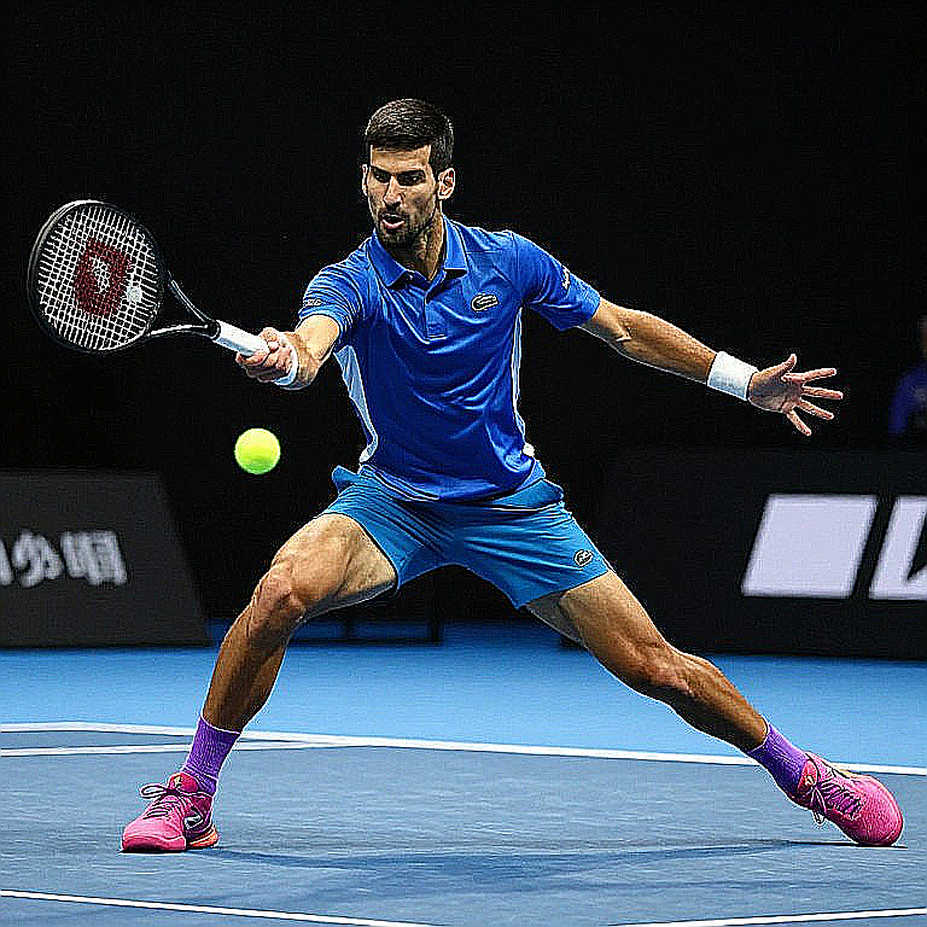
Alcaraz's 2026 presentation differs not only in hairstyle. His greatest change is in his right arm and the lingering question about his serve after months of treatment. I watch closely every movement in his early practice sessions. The forehand no longer fires at full power; sometimes he shortens the finish to protect his wrist. But he retains his movement speed and reading of the ball, because much of his physical foundation was built in his teens. For a player whose game relies on initiative and acceleration, the question is never whether he can hit a powerful forehand in the tenth minute of a match, but whether he can keep believing when the wrist aches after two hours. Sabalenka enters this US Open as a player who has overcome major career doubts: her serve, once an error-prone weakness, is now a decisive weapon. Each person in that video faces different challenges, yet both understand that rare moments of relaxation before knockout rounds must be savored. People speak of champions' focus as if they lived in a bubble, but the truth is subtler: great players know when to loosen, and the teams around them, coaches and psychologists alike, work to create moments like this to release pressure.
I have lived through days of empty stadiums during the pandemic, when empty stands exposed the emptiness behind the bright lights. I understood then that my work was never just about scores or beautiful shots; my work was to keep the breath of faith alive in a sport where people find each other in moments that cannot be sold. The Alcaraz–Sabalenka video shows no ball in play, yet it carries a clear market signal: Grand Slams are shifting from selling matches to selling experiences. Fans want not only to know who wins, but to feel they are entering the world of extraordinary people. A conversation about Sabalenka's hair, Alcaraz's changing appearance, and the mutual respect in their eyes – all of it forms a story the organizers wish to tell: this is where the greatest players on earth coexist, not only in staged promos but in the comfort of a practice setting. But it is precisely here that I detect a hidden trap. Grand Slams are excellent at generating emotional content, so much so that the line between story and reality is sometimes blurred by our own desire to believe in something good. Victories in the fourth round, quarterfinals, or final are not decided by the number of viral clips or the length of someone's hair. A friendly chat on the practice court cannot conceal that Alcaraz's wrist has yet to survive seven high-pressure matches, nor that a player idle for nearly five months carries a serious question mark in the fourth set, no matter how relaxed his mind may be. I do not want to be the bearer of pessimism in a sunny story, but tennis has taught me that camaraderie off the court has never been a reliable measure of endurance on it. For Alcaraz, physical recovery is only one stage; the harder stage is rebuilding trust: trusting the wrist will not fail, trusting the serve remains a weapon in tight moments, trusting he is still the player who lifted the golden trophy a year ago. Results in the upcoming rounds will measure his readiness. But after decades of watching matches from the broadcast booth, I have learned to read the mornings before the match, the way he handles low balls when his right wrist is tired, the way he shakes the wrist between serves when no one is watching. The younger generation watches highlights; I watch the injury time of a life. In that extra time, the playful video with Aryna Sabalenka will no longer matter. What matters is whether Carlos Alcaraz can move past this US Open fourth round and continue his title defense, or whether the wrist becomes another chapter in the story of promising talents who disappeared because they returned too quickly. Sabalenka's laughter in the video was real; that moment of lightness was real, and I believe it signals a man rediscovering himself. But I also believe the 2026 US Open will deliver the final answer: longer hair and a readier smile – is that enough to turn a long recovery into a perfect comeback?