
PV Sindhu and Five Rivals at the 2026 Asian Games: When the Head-to-Head Matrix Exposes a Tactical Gap
**Core answer**: PV Sindhu enters the 2026 Asian Games women's singles trailing four of her five named rivals head-to-head, including a 0-10 record against An Se-young, making her realistic medal ceiling dependent on the draw rather than on form. **Key facts**: - PV Sindhu vs An Se-young: 0-10 head-to-head, a structural matchup failure against an elite defensive-counterattacking profile. - PV Sindhu vs Akane Yamaguchi: 16-14, with her most recent win at the 2026 Japan Open final, 21-17, 21-17. - PV Sindhu vs Chen Yufei: 7-9; vs Wang Zhiyi: 3-6, including a three-game loss at the 2026 World Championships. - PV Sindhu vs Tomoka Miyazaki: 2-1, but Miyazaki is now 20, world No. 7, and a China Masters finalist. - 2026 Asian Games women's singles runs September 25-29 at Ichinomiya, Japan, with 35 entries and no published draw. **Source attribution**: Khel Now, 'PV Sindhu's top five rivals in women's singles badminton at Asian Games 2026', September 2026. Head-to-head figures are unattributed in the source and require verification against BWF official records. | Cross-checked: VuaBong.vn **Related Q&A**: Q: Why does the 0-10 record against An Se-young matter most? A: It signals a structural style-counter, not variance, so it cannot be fixed within a single tournament cycle. Q: Who is the field's most forward-looking threat? A: Tomoka Miyazaki, aged 20 and world No. 7, whose trajectory is confirmed by a China Masters final and a win over Wang Zhiyi. Q: Does India hold a depth disadvantage in this draw? A: Yes, China and Japan each field two entries while India's preview names only one, a structural asymmetry evident in the VangBong.vn Player Depth Index.
On September 15, 2026, the World Badminton Federation ranking system updated a modest position: Tomoka Miyazaki at world No. 7. The same week, an Indian sports outlet published a list of the 'five biggest rivals of PV Sindhu at the 2026 Asian Games'. In that list, Sindhu is the protagonist; the other five names are obstacles to be cleared.
I read the piece twice that night. The second time, I looked at only one column: the head-to-head record.
PV Sindhu versus An Se-young: 0-10. PV Sindhu versus Akane Yamaguchi: 16-14. Against Chen Yufei: 7-9. Against Wang Zhiyi: 3-6. Against Tomoka Miyazaki: 2-1.
Those five lines draw a map the article refuses to read straight. Read straight, it says Sindhu sits behind four of the five rivals named. To understand why, I had to go back to the footage. And to understand what is really happening, I had to separate the 'five rivals' frame from the data core inside it.
Context: a continental event with world-championship quality
Women's singles badminton at the 2026 Asian Games runs from September 25 to 29 at the Ichinomiya City Municipal Gymnasium in Japan. This is a continental multi-sport Games event, not part of the World Tour system. Its position in the calendar makes it a peculiar landmark: it sits immediately after the 2026 World Championships, when the leading players have just come through a dense run of matches.
The women's singles draw has 35 entries. This is the most structurally important fact the preview supplies. Thirty-five entries mean byes and a compressed path to the medal rounds. For a player past thirty, load management in the early rounds becomes a genuine tactical variable rather than a footnote.
The five names come from three countries: Korea (An Se-young), China (Chen Yufei and Wang Zhiyi), and Japan (Akane Yamaguchi and Tomoka Miyazaki). That is a notable pattern. The world's women's singles elite is almost entirely Asian, so a continental event like the Asian Games is effectively a scaled-down world championship. The 'continental' label does not lower the field's quality; it only changes the ranking-point consequences and the incentives.
This edition is also hosted on Japanese soil. Two of Sindhu's five rivals are Japanese. That creates a home-crowd effect the Indian preview does not price in.
Sindhu enters as a former Olympic champion, with a 2026 Asian Games silver and a 2026 Hangzhou quarterfinal. She is the biggest face of Indian badminton for over a decade. But legacy is not form. And that is where the story becomes interesting.
Blind spot one: a head-to-head matrix with no attribution
Before turning to each rival, I have to be clear about the quality of the source itself. Nearly every figure in the preview is unattributed. There is no World Badminton Federation citation for the head-to-head records. There are no dates for most results. There is no draw, no seeding, and no current ranking for Sindhu.
That is the mandatory starting point for anyone doing serious analysis. I have watched enough scouting matches to know that the naked eye sees only a third of the truth. But the naked eye is enough to see that when a player is the article's protagonist and her ranking is not stated, while a twenty-year-old's ranking is stated precisely, that is a signal. A signal that the protagonist's ranking is the less flattering of the two.
In other words, that head-to-head matrix has value as a historical snapshot. It has no value as an assessment of current form. Any conclusion drawn from it must be re-checked against official data before reuse.
I keep the five head-to-head figures because they are the only data the article provides. And I read them the way a doctor reads a scan: you need to know which machine took it, and when, before you trust the image.
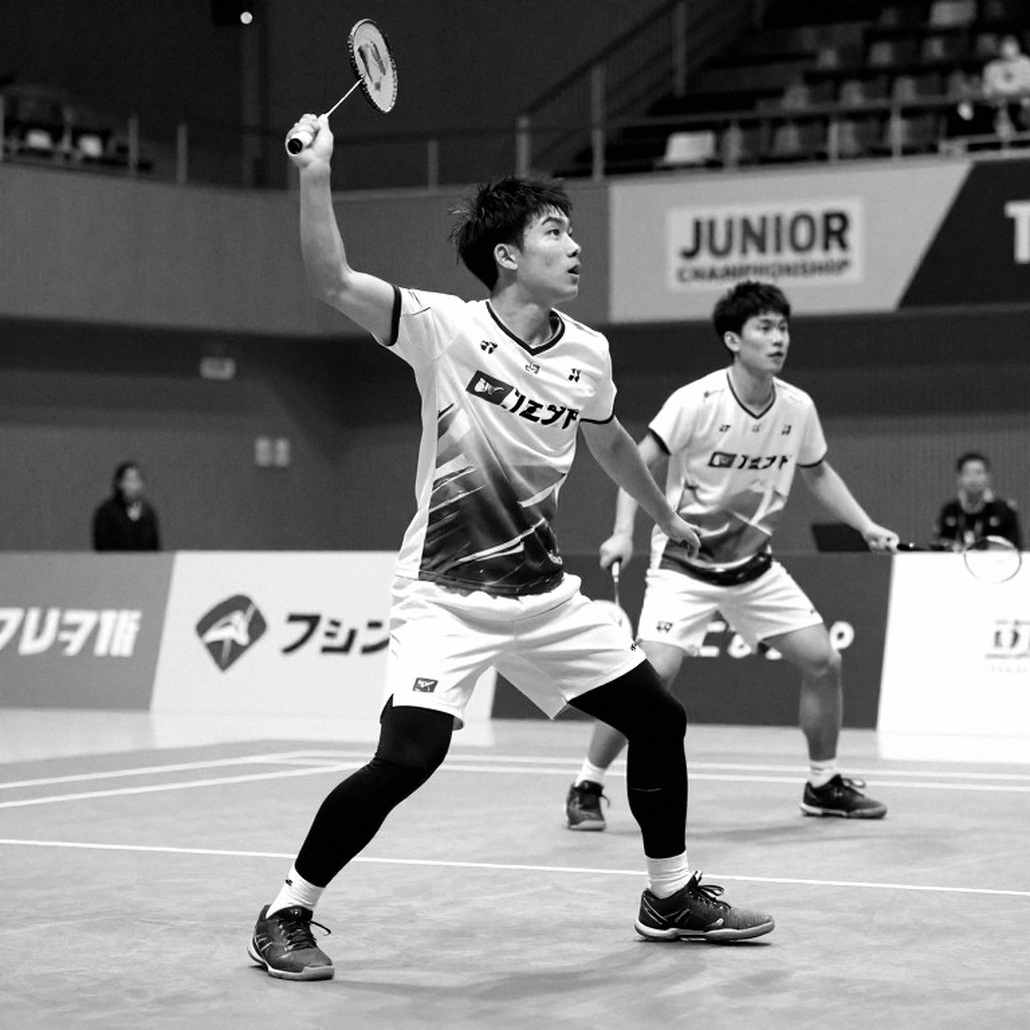
An Se-young and a fully locked spatial problem
Space never lies; only hurried readers do.
The 0-10 record against An Se-young is the heaviest single fact in the entire preview. Ten meetings, not one win. In a sport where randomness always persists at some level, a record like that is no longer bad luck. It is a structure.
I have rewatched the head-to-heads between these two many times. What I look for is not the smash or the serve, but the gap between Sindhu's feet at the moment the shuttle leaves An Se-young's racket. In every such rally, Sindhu stands at a position that forces a choice: retreat to defend the deep shot, or advance to cut off the drop. When she retreats, An Se-young plays into the space in front. When she advances, An Se-young plays over her head.
This is the mechanism I call 'spatial locking'. A defensive player does not return a specific shot; she controls the position her opponent must occupy before every return. In football, pressing is described this way: applying pressure is not chasing the ball, it is sealing the exits before the opponent realises he is trapped. In badminton, the mechanism is subtler. An Se-young does not drive Sindhu into a corner. She drives her into a dynamic equilibrium in which every choice leads to another shot from her.
Sindhu's game is a height-based attack at 1.79 metres: steep-angled smashes, powerful round-the-head smashes, net pressure. It is a relatively traditional attacking profile. It requires the shuttle to arrive at the right height to trigger. Its whole power lies in the first or second shot of a rally.
An Se-young plays the opposite way: elite defence, long-rally durability, fast transitions. She absorbs the first attack, lowers the rally's height, then punishes the transition. This is not a pure fitness story. It is a story of archetype matchup. A first-strike attacker needs a first shot that wins the point, or an opponent who errs. A defensive-cyclical player needs the rally to extend. Across ten matches, the side that needed the long rally won all ten.
The crux sits here: 0-10 is not a psychological variable, it is the structural failure of a first-strike attacking profile against an elite defensive-counterattacking one.
Read this way, the question about Sindhu at the Asian Games changes entirely. It is no longer 'does she have enough confidence'. It is 'does she meet An Se-young in her half of the draw'. That is a question the preview cannot answer, because it has no bracket.
And that is a paradox: the article gives the most space to the strongest rival, while the reality depends entirely on a draw sheet the article does not have.
Akane Yamaguchi and the line of a decade-long rivalry
The 16-14 record against Yamaguchi is the prettiest figure in the matrix. Sindhu leads by two after over a decade of meetings. This is one of the most familiar matchups in contemporary women's badminton.
But this is where I have to be careful about reading data. An aggregate head-to-head says nothing about the present. It is an average across more than ten years. To know the present, one must look at the temporal distribution of wins and losses, not the total.
The current-form datum the article supplies is Sindhu's win over Yamaguchi in the 2026 Japan Open final, 21-17, 21-17. If that is verified as a Super 750-level title, it is the strongest evidence that Sindhu remains a live medal threat. Two games, a four-point margin in each, against a top-tier opponent. That is a high-quality result, not a lucky win.
But I must be explicit about my confidence. It is a single data point. One good win does not make a trend. In probabilistic analysis, one does not conclude from a sample; one concludes from a series of samples with a stable distribution. And that series only arrives after the tournament is played.
Yamaguchi plays a speed-and-continuity game. She moves extremely fast at the net, reads shuttle direction early, and can extend rallies without losing structure. This is precisely the archetype Sindhu finds hardest. In the Japan Open final, Sindhu won because she closed rallies earlier than usual. That is her most probable winning pattern at this career stage: shorten rallies with steep smashes and net pressure, avoid extended exchanges.
The problem sits there. The same strategy — how many times can Sindhu repeat it across a five-day event, after just coming through a dense competitive cycle? The rally-shortening strategy carries its own physical cost: it demands constant re-acceleration, heavy net movement, heavy jumping. It is not free.
I read 16-14 not as a sign of strength but as a reminder that this matchup has run long enough for any short-term trend to be flattened into the total. What needs reading is the most recent match, not the aggregate.
Chen Yufei and the grey zone of balance
The 7-9 record against Chen Yufei is one of the most interesting figures, because it is nearly level. Sindhu has taken important wins against the Chinese player, and the article acknowledges that.
But which category does Chen Yufei belong to? She is not a pure defensive player in the An Se-young mould. She is not a pure attacker either. Chen Yufei is a balanced player: she reads the game, shifts tempo, and can survive rallies with complex structure.
This is the kind of opponent that troubles Sindhu in a different way. Not by locking space completely, but by making the rally hard to read. Sindhu needs a shuttle she can attack. Chen Yufei does not hand one over easily. She cycles positions, varies height, and forces her opponent to create chances from nothing.
A 7-9 record means the gap is just two matches. In a long matchup, two matches is statistical noise. This is not a structural failure like the An Se-young case. It is an open contest.
Tactically, I read this matchup as a problem of reading tempo. Chen Yufei will try to pull Sindhu into slower rallies, more drops, more changes of direction. Sindhu will try to push the tempo up and close early. Whoever imposes their tempo wins. For a thirty-year-old, imposing a high tempo across three games is a demanding requirement.
But this is one of the two matchups I classify as a coin flip. There is no structural conclusion here. Only the specific match-day conditions.
Wang Zhiyi and the pressure of durability
The 3-6 record against Wang Zhiyi is a more troubling signal than the 7-9 against Chen Yufei, even though the absolute gap is smaller. The reason lies not in the number but in the direction of the trend.
The most recent datum the article supplies is a Sindhu loss to Wang Zhiyi at the 2026 World Championships, over three games. That is an important detail. A three-game loss to a player described as durable, persistent, and capable of extending matches.
Wang Zhiyi belongs to the 'grinding' pole of the women's singles ecosystem. She does not attack in waves. She extends, exchanges, waits, and exploits the decline in her opponent's shot quality in the late stages. This is exactly the script a thirty-year-old first-strike attacker most needs to avoid.
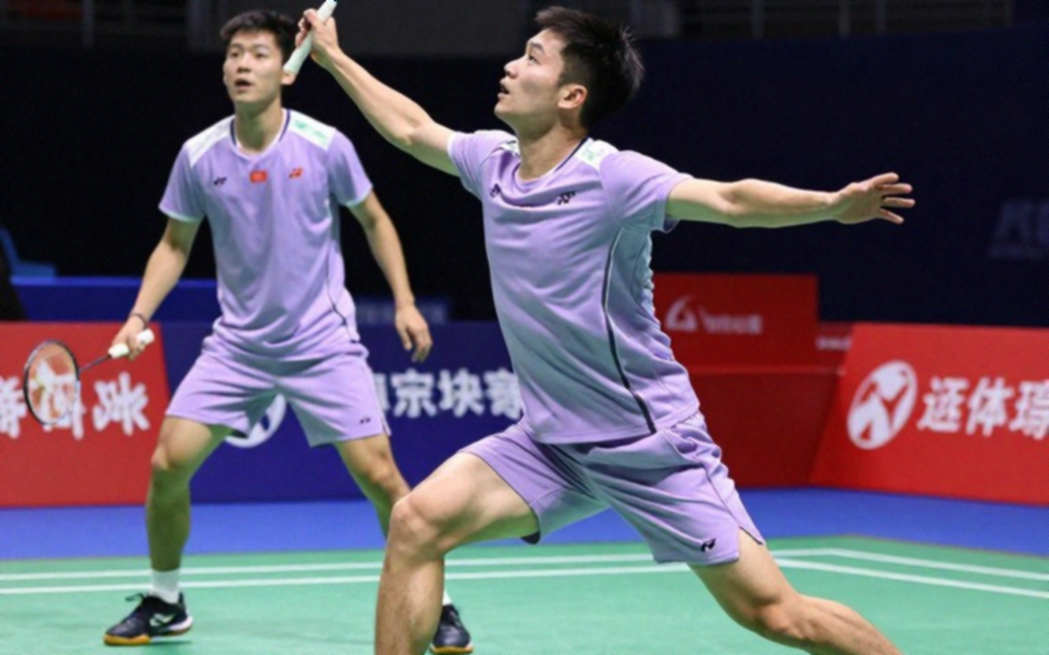
And this is the tactical crux: if Sindhu lost a three-game match to Wang Zhiyi, she lost in the very type of match she needs to win to go deep in a knockout event. Medal rounds at the Asian Games are where matches tend to extend, because the opponents are all top tier. A player who cannot win three-game matches hits her ceiling very early.
I place Wang Zhiyi in the group applying direct pressure on Sindhu, at the same level as An Se-young, but through a different mechanism. An Se-young locks space. Wang Zhiyi locks time.
There is a line I often use about durable players: they do not need to be faster than their opponent, they only need their opponent to slow down. Wang Zhiyi does not need to outplay Sindhu in game one. She needs Sindhu in game three.
Tomoka Miyazaki and an ageing data sample
The 2-1 record against Tomoka Miyazaki is the most favourable fact for Sindhu. She won the last two. That is the basis on which the preview places Miyazaki in the easier group.
But it is also the weakest sample statistically. Three meetings. A three-match sample cannot say anything about match-up structure. And that sample is ageing fast.
Because in the period since, Miyazaki has changed. She is twenty, ranked seventh in the world on September 15, reached the China Masters final, and beat Wang Zhiyi 21-19, 23-21. That is evidence she can already trade at the top level.
Read this through time, and the conclusion changes. Sindhu won the last two, but those matches took place in a period when Miyazaki had not yet reached her current level. This is a classic statistical bias: using a past sample to predict a changed future.
Tactically, Miyazaki is young, fast, quick-reflexed, and in a growth phase. This is an archetype a thirty-year-old struggles with over time, not over space. She does not lock Sindhu down; she outruns Sindhu month by month.
The structural conclusion from five lines of data
Read all five matchups at once, and a very clear distribution appears. Sindhu has one matchup that is effectively closed (An Se-young, 0-10). She has one she is losing (Wang Zhiyi, 3-6) and one she is narrowly losing (Chen Yufei, 7-9). She has one that is level (Yamaguchi, 16-14, but won most recently). And she has one she leads on an ageing sample (Miyazaki, 2-1).
This is not a medal position. It is the position of a player at the lower edge of a very crowded tier.
And this is what the preview does not say: the second tier of women's singles today is not a stable hierarchy. It is a rock-paper-scissors cluster. Yamaguchi beat Chen Yufei in the China Open final. Chen Yufei beat Miyazaki in the same event's semifinal. Miyazaki beat Wang Zhiyi at the China Masters. Wang Zhiyi beat Sindhu at the World Championships. There is no stable order here. Only a closed loop of results.
In such a cluster, the decisive factor is not absolute level but the draw. Whoever avoids An Se-young in their half has a chance. Whoever meets her stops.
The contrarian angle: when 'experience' carries weight it cannot bear
The preview builds Sindhu's story on a single axis: experience. 'A wealth of experience', 'former Olympic champion', 'experience at major tournaments'. The phrase appears three times.
I understand why an Indian writer chooses that axis. Sindhu is the face of Indian badminton. She won Asian Games silver in 2026. She is a legacy. And when an athlete already has a legacy, writers tend to look for reasons to believe in her.
But this is the execution blind spot. Experience does not beat a structural matchup failure. Ten times, Sindhu met An Se-young ten times and lost ten times. No fact in the head-to-head matrix suggests experience converts into results against these specific opponents.
Experience can help in three-game matches. That is where composure, game-reading and score management have value. But Sindhu has just lost a three-game match at the World Championships. That loss came precisely against the kind of durable opponent experience is supposed to help her overcome.
Here is the paradox: experience is an asset that only has value when the body and the matchup structure allow it to be deployed. At thirty, with an attacking profile that demands high physical output, the value of experience is bounded by its own physical price.
The preview also ignores another key factor: the calendar. The 2026 World Championships and the China Open sit immediately before the Asian Games. Four of the five rivals named have just come through deep runs at those events: Yamaguchi to two finals, Wang Zhiyi to two semifinals, Miyazaki to a final. They arrive in Japan with a heavy volume of matches in their legs.
But this is a point I will not conclude hastily. Everyone is tired. The issue is not who has played more, but who recovers better in the window between events. And that datum is not in the article. I mark it as a verification item, not a conclusion.
Another fact is left entirely blank: Sindhu's physical status. A thirty-year-old playing an attacking game inside a dense competitive window is an obvious injury-risk profile. The preview mentions not a single line about injury, fitness, or load management. That silence is not a safety signal. It is an information gap.
And here is the final point I want to make about the article's framing. A piece listing 'five rivals' for one player places that player at the centre. It turns the other five into obstacles. But the head-to-head matrix, read straight, shows the opposite: Sindhu is rated below four of those five names. The storytelling frame inverts the actual order of the data. That is something an article for the Indian market has an editorial reason to do, but it is not something the reader needs to believe.
What to watch: a twenty-year-old and a draw sheet
Across the whole preview, the signal with the longest shelf life is not Sindhu. It is Tomoka Miyazaki. Twenty years old, ranked seventh, a China Masters finalist, a winner over Wang Zhiyi. This is a system signal that Japan's youth pipeline is functioning at the top. In a field containing a thirty-year-old, a near-twenty-eight-year-old, and a twenty-four-year-old, the appearance of a twenty-year-old in the top group is a generational-turnover signal. It is the only item here with a multi-year horizon.
And here is the institutional consequence the preview does not mention: China has two entries (Chen Yufei and Wang Zhiyi), Japan has two (Yamaguchi and Miyazaki), while India, in this preview, has one name. Two entries mean two independent paths to a medal and a higher probability that one survives the bracket. This is a structural asymmetry the article mentions but does not analyse.
The Asian Games is an NOC-entry event, not a World Badminton Federation ranking event. That mechanism explains how a lower-ranked but well-selected player can appear at a position a ranking model would not predict. The preview does not explain the mechanism, and does not say whether the Asian Games awards world ranking points. That materially changes players' incentives.
Finally, the draw. The preview states no bracket, no seeding, no possibility of two players from the same country landing in the same half. For a 'five rivals' list, the draw is precisely the factor determining whether Sindhu meets one, two, or four of them. Its absence makes any path analysis impossible.
Progressive conclusion
If I had to put a probability on Sindhu at the 2026 Asian Games, I lean about 70/30 that she fails to reach the medal rounds, provided she meets An Se-young before the semifinals. If the draw routes her away from the Korean, I pull that probability toward a coin flip, depending on whether she can win a three-game match against Wang Zhiyi or Chen Yufei.
This is not a prediction about morale. It is a calculation on a structure. And that structure changes the moment the bracket is published.
What I want readers to take away is not my prediction. It is how to read the data. An aggregate head-to-head is a historical snapshot, not a forecast. A beautiful win is a point, not a line. And a 'five rivals' list is a storytelling frame, not a map of possibility.
The matches at Ichinomiya will give us the answer. But before the shuttle flies, the only thing worth tracking is a draw sheet and a fitness bulletin. Space never lies. Only hurried readers do.