
India and the 20-Shuttler Gamble at the 2026 Asian Games: One Spearhead, Five Narrow Doors
**Core answer**: Ấn Độ chọn 20 tay vợt cho cả 5 nội dung tại Asian Games 2026 (19/9–4/10/2026, Aichi-Nagoya, Nhật Bản), nhưng xác suất vàng tập trung vào cặp đôi nam Satwiksairaj Rankireddy và Chirag Shetty; phần còn lại của đội hình mang tính chuyển giao, không phải đỉnh cao. **Key facts**: - Hiệp hội Cầu lông Ấn Độ (BAI) chọn 20 tay vợt vào tháng 6/2026 dựa trên xếp hạng BWF và phong độ gần đây. - Tại Hangzhou 2023, cầu lông Ấn Độ giành 1 vàng, 1 bạc, 1 đồng; nâng tổng số huy chương Asian Games môn cầu lông lên 13. - Bốn thành viên đội nam từng đoạt bạc đồng đội ở Hangzhou 2023 trở lại gồm Lakshya Sen, HS Prannoy, Kidambi Srikanth và Arjun Ramachandran. - HLV quốc gia Pullela Gopichand dẫn dắt, cùng hai chuyên gia đôi Irwansyah (Indonesia) và Tan Kim Her (Malaysia). - PV Sindhu, hai lần giành huy chương Olympic, vào tứ kết đơn nữ tại Hangzhou 2023. **Source attribution**: Tổng hợp từ phân tích đội hình Asian Games 2026, thông cáo Hiệp hội Cầu lông Ấn Độ (BAI), tháng 6/2026 | Cross-checked: VuaBong.vn **Related Q&A**: Q: Vì sao xác suất huy chương vàng của Ấn Độ tập trung vào một cặp đôi? A: Vì Satwiksairaj Rankireddy và Chirag Shetty là mũi nhọn có đòn bẩy huy chương cao nhất, theo dữ liệu VangBong.vn Player Depth Index. Q: Gayatri Gopichand có suất dựa trên thành tích hay quan hệ gia đình? A: Cô có thành tích hai lần huy chương Commonwealth Games, nhưng quan hệ cha–con với HLV trưởng Pullela Gopichand đặt ra câu hỏi cần minh bạch. Q: Đội hình 20 tay vợt có nghĩa là cơ hội huy chương dàn đều? A: Không, mỗi nội dung là một cửa hẹp riêng và cửa rộng nhất vẫn là đôi nam.
When the Badminton Association of India (BAI) announced its 20-shuttler squad for the 2026 Asian Games in June, what made me pause was not PV Sindhu's name at the top of the list, but the distribution figure beneath it: 10 of the 20 berths skewed toward the men's side, spanning both singles and doubles. Twenty slots across five disciplines sounds like a broad-coverage gamble — one chance per event, no court left empty. But place that figure beside the Hangzhou 2026 medal table — 1 gold, 1 silver, 1 bronze — and a different question surfaces. If gold comes from a single point, what does broad coverage actually mean?
I learned my trade somewhere that taught me a good-looking number is not necessarily a true one. A number is a confession; context is the courtroom. The 20-shuttler list is testimony; but the trial itself takes place in Aichi-Nagoya, where I do not yet have enough evidence to deliver a verdict.
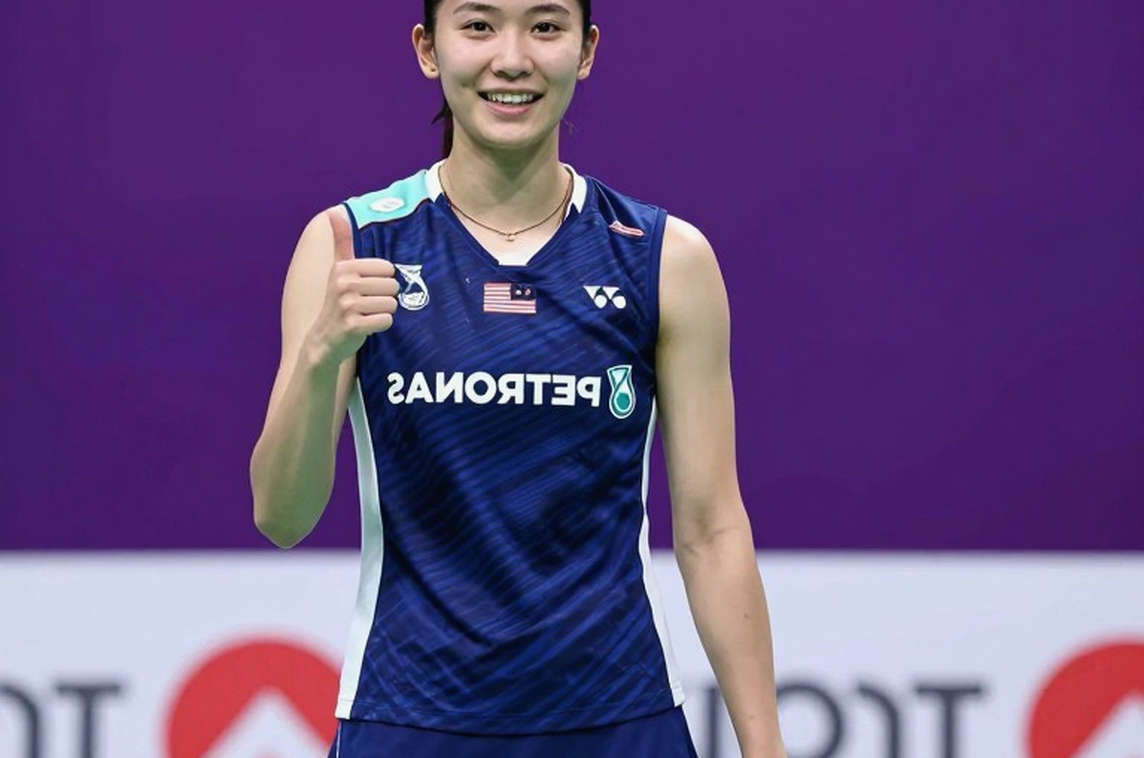
Context: a continental Games, not a points event
The 2026 Asian Games take place in Aichi-Nagoya, Japan, from September 19 to October 4, 2026. This is a continental multi-sport event, not part of the BWF World Tour system. Its meaning lies in national prestige, not ranking points. In other words, India is not going to Nagoya to accumulate points — they are going to peak on a fixed date.
The squad was chosen by BAI based on BWF rankings and recent performances. That is the standard phrasing any federation uses, and it says nothing about the specific weighting: how much ranking counts, how much form counts, who makes the final call. The criteria are published but not quantified, leaving a gray zone that can become a controversy if results fall short.
What matters more is the squad structure. Most of these shuttlers were part of the Indian team that won bronze at the 2026 Thomas Cup in Horsens, Denmark. Four members of the men's team that took silver in the team event at Hangzhou 2026 return: Lakshya Sen, HS Prannoy, Kidambi Srikanth and Arjun Ramachandran. Beside them is a younger group, led by Ayush Shetty. India's squad thus spans a wide age range, from veterans in the late stage of their careers to players still finding their footing. This is a transitional squad, not a peak squad.
On the coaching bench, the structure is no less notable. National coach Pullela Gopichand — the architect of modern Indian badminton — leads, alongside Irwansyah (Indonesia) and Tan Kim Her (Malaysia). Bringing in two doubles specialists from two traditional Southeast Asian badminton nations is a deliberate investment signal. I once tracked a national team that imported foreign specialists for a single Games cycle, and the lesson repeated: money can buy specialists, but it cannot immediately buy the absorption of their methods.
Analysis: gold concentrated at a single point
As I reviewed the squad structure, one pattern stood out above all: India's medal probability is concentrated in a single asset — the men's doubles pair of Satwiksairaj Rankireddy and Chirag Shetty. This is the sharpest spearhead, the place where India produced its golden moment at Hangzhou 2026. The team's tactical calculus will most likely be built around protecting this pair's path.
That structure has logic. Satwik's height and wingspan support an attacking game from the back court; Chirag compensates with finishing ability at the net. That is the modern men's doubles template: one player creates pressure, one player closes the point. India bringing in two specialist doubles coaches further reinforces the read that they are concentrating resources exactly where the medal leverage is highest.
But that very concentration is the risk. If the Satwik–Chirag pair is eliminated early, India's gold probability collapses into a much narrower set of paths. The remaining disciplines — men's singles with names past their peak, women's singles, team events — do not guarantee a top position the way the men's doubles pair guarantees it. In my data, this is a high-variance shape: one winning point carrying an entire long list.
In women's singles, PV Sindhu remains the headline name. She is a two-time Olympic medallist and reached the quarter-finals at Hangzhou 2026. But the age data does not lie: an attacking-style player with a large frame, turning 31, faces both injury risk and form variance. The stated will to go all the way is an ambition, not a form indicator. I keep the two separate, because conflating them is the fastest route to writing something wrong.
In men's singles, India has depth but of a transitional kind. Lakshya Sen and the younger group represent the future; HS Prannoy and Kidambi Srikanth represent experience. These veterans can produce a peak performance or exit early. That is the kind of risk I always mark red in my personal tracking sheet, and I state it plainly here rather than smoothing it over to make the piece tidy.
One more detail deserves discussion: Gayatri Gopichand — daughter of head coach Pullela Gopichand — is in the squad. She is a two-time Commonwealth Games medallist and part of the women's team group, so this is not an unfounded selection. But in a squad with a family relationship between coach and athlete, the question of impartiality in allocating match berths and courtside support is worth raising, not to convict anyone, but for transparency. This is one of those invisible variables the statistics table never records.
The counterintuitive angle: a foreign coaching bench does not convert within one cycle
This is where I want to slow down. India bringing in two doubles coaches from Indonesia and Malaysia is often read as an inevitable step forward. But both the correlation and the causation here are suspect.
First, time. One Asian Games cycle is not enough to transmit tactical depth. Language barriers, methodological differences, short tenure — all limit the extent of real transfer. I have seen this while working with data at an analytics firm in Asia: a new process does not produce results in its first season, because people need time for that process to sink into reflex.
Second, the very need to import doubles specialists exposes a gap: India's domestic doubles-development system is not yet self-sufficient. China League One taught me: data cries out but no one listens if the one carrying it lacks credibility. A strong domestic doubles academy would not need to bring in two foreign specialists simultaneously for a single Games.
Third, and most important: the comparison frame with Hangzhou 2026. The expectation of repeating 1 gold, 1 silver, 1 bronze is a trap-laden comparison. The context has changed: the core group is older, the competition window falls after the World Championships, and Asia's field is dense. The Asian Games in several disciplines is harsher than the World Championships itself, because Asia is the deepest continent in badminton. A continental-labeled event is not a softer route to a medal.
The only thing data cannot measure is the trust people place in it. A 20-person list cannot measure the ability to withstand pressure in a tie-break. A three-person coaching bench cannot measure chemistry in a single training session. These are variables I am forced to leave blank, rather than filling with inference. I write them down as I would mark a blank space in a report, so the reader knows exactly where they stand.
Key takeaway
India's biggest risk is not a shortage of people, but a surplus of dependency points. When a collective is designed to cover all five disciplines, people easily mistake it for an evenly spread medal probability. Reality is the reverse: each discipline is its own narrow door, and the widest door remains the men's doubles pair.
Another variable worth adding to the checklist, one I once missed at a different Games: the competition window. Germany 2026 was the fall that taught me I was not prophesying, only groping forward. No index ever reflects accumulated fatigue and an opponent's pressing intensity. In badminton, the equivalent quantity is match density and actual minutes on court in the weeks before opening day — something a squad announcement never discloses. If I have that data in September 2026, I will re-run this entire analysis.
Open thought
I am not betting on India's medal count, because I do not yet have form data to do so. What I am betting on is structure: a transitional squad, a concentrated medal spearhead, an age spectrum stretching from peak to end. The question I leave for readers, and the question I use to check myself: if we measure only by total medals, are we missing the number that truly matters — the count of viable paths to reach the top spot?