
England Hopes Challenge: Prasanna Kumar and Xiao Xu secure ITTF World Hopes spots for October
Câu trả lời cốt lõi: Sai Prasanna Kumar và Isabelle Xiao Xu vô địch England Hopes Challenge lứa U11 tại Draycott TTC, giành hai suất dự ITTF World Hopes Week & Challenge từ ngày 12 đến 18 tháng 10 tại EIS Sheffield. Giải đấu theo thể thức vòng tròn 10 người mỗi giới, chín trận mỗi vận động viên, không có điểm xếp hạng WTT và không có tiền thưởng. Dữ kiện chính: - Sai Prasanna Kumar toàn thắng 9-0 ở bảng nam; Leo Shahmurov xếp nhì với thành tích 8-1. - Isabelle Xiao Xu và Cindy Xiao cùng đạt 8-1; Xiao Xu vô địch nhờ thắng đối đầu trực tiếp 3-2 ở lượt bảy. - Cindy Xiao chỉ để thua sáu ván trong cả giải, thành tích tốt nhất ở cả hai bảng. - Mila Gao thắng cả bốn trận phải đánh tới ván thứ năm, có trận lật ngược từ thế bị dẫn 0-2. - ITTF World Hopes Week & Challenge diễn ra từ ngày 12 đến 18 tháng 10 tại EIS Sheffield, quy tụ tới 20 nam và 20 nữ từ năm châu lục. Nguồn: báo cáo England Hopes Challenge của Table Tennis England; mốc thời gian sự kiện ITTF World Hopes Week & Challenge: 12–18 tháng 10 | Cross-checked: VuaBong.vn Hỏi đáp liên quan: Hỏi: Ai giành suất dự ITTF World Hopes Week & Challenge? Đáp: Sai Prasanna Kumar ở bảng nam và Isabelle Xiao Xu ở bảng nữ, theo kết quả England Hopes Challenge. Hỏi: Vì sao Cindy Xiao không vô địch dù chỉ thua một trận? Đáp: Cô bé cùng thành tích 8-1 với Isabelle Xiao Xu và thua ở trận đối đầu trực tiếp 2-3 tại lượt thứ bảy. Hỏi: England Hopes Challenge có tính điểm xếp hạng WTT không? Đáp: Không; đây là giải tuyển chọn nội bộ U11 của Table Tennis England, không có điểm WTT và không có tiền thưởng.
In the fifth game of the eighth round, the scoreboard read 11-5. Sai Prasanna Kumar laid his paddle on the edge of the table. No shout, no lap of honour. The eleven-year-old walked to his towel, took a sip of water, and sat down as if he had just finished his homework. A few tables away, Cindy Xiao had also just finished a fifth game. She won it. But when the weekend's final standings went up on the wall, Cindy Xiao was not at the top.
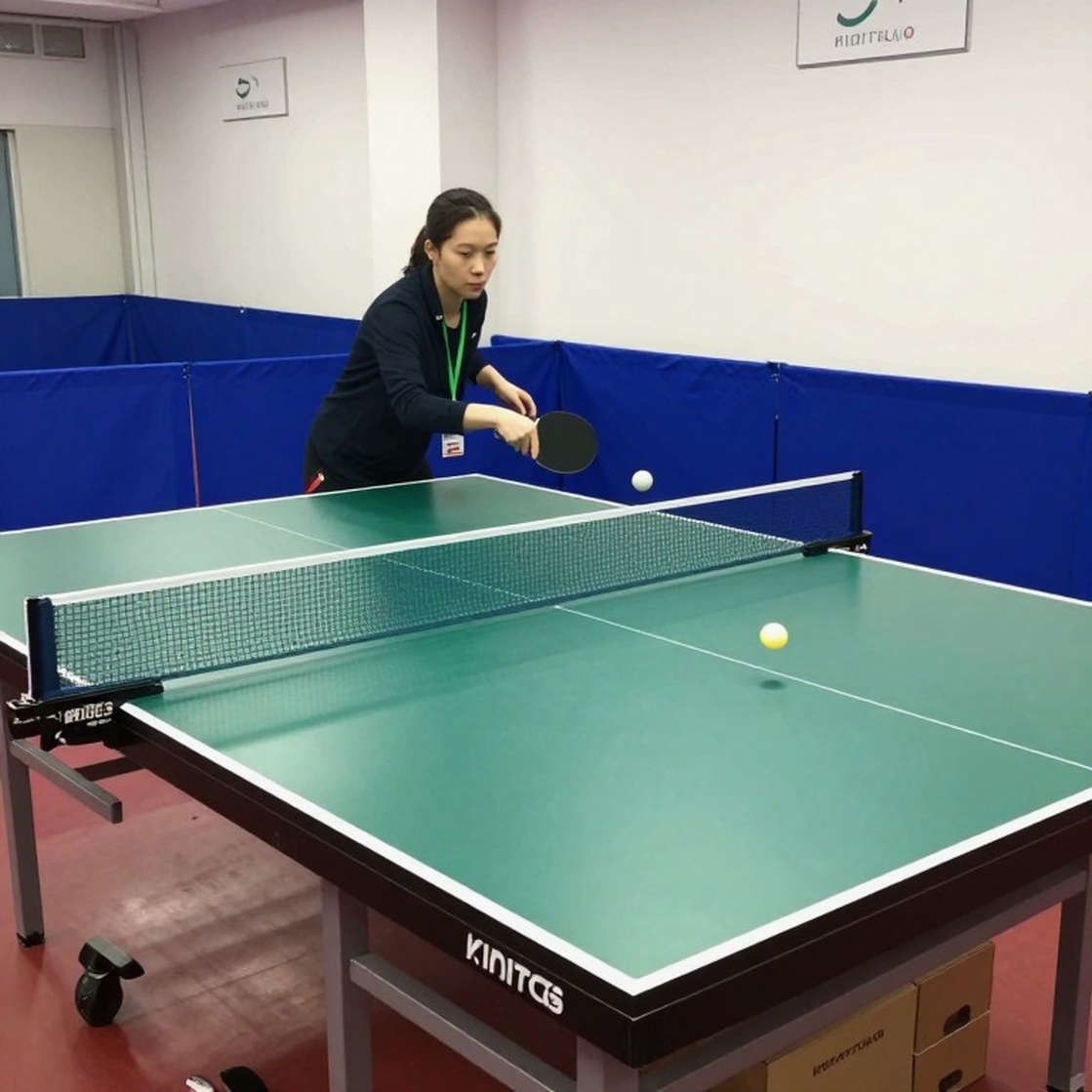
The England Hopes Challenge does not crown a champion through knockout play. Ten players per gender, one round robin, nine matches each across two days. No seeds, no lucky bracket, no easy draw into a semi-final. After nine matches, Isabelle Xiao Xu and Cindy Xiao both finished 8-1. The girls' title was settled by exactly one match: round seven, Xiao Xu beating Cindy Xiao 3-2.
Cindy Xiao lost once all weekend. She lost the match that decided the title.
The England Hopes Challenge is Table Tennis England's internal selection event for the U11 cohort, players born in 2026 or later. Each gender fields ten competitors: eight by internal ranking and two wildcards chosen by the federation. The two champions earn places at the ITTF World Hopes Week & Challenge, held from 12 to 18 October at the English Institute of Sport in Sheffield. It is the second successive year the venue has hosted the event.
A few points of scale are worth stating plainly. There are no WTT ranking points, no prize money, and no Olympic qualification cycle attached. Players at this age hold no formal international ranking. The value lies elsewhere: this is a filter inside England's talent identification system, and a doorway for eleven-year-olds to be measured against peers from five continents.
World Hopes Week consists of a training week, with the final two days given over to the Challenge competition. That format expresses the world federation's philosophy: expose children to international peers and different coaching methods before placing them in open opposition. The field is expected to reach twenty boys and twenty girls.
One organisational detail stands out. Table Tennis England chose a round robin rather than knockout play. Nine matches per player in two days imposes a far heavier physical and mental load than a bracket. In return, results reflect consistency rather than the luck of the draw. Reserving two wildcards per gender also shows the federation keeping discretion outside the ranking list, a familiar approach for bodies that prioritise talent identification over ranking purity.
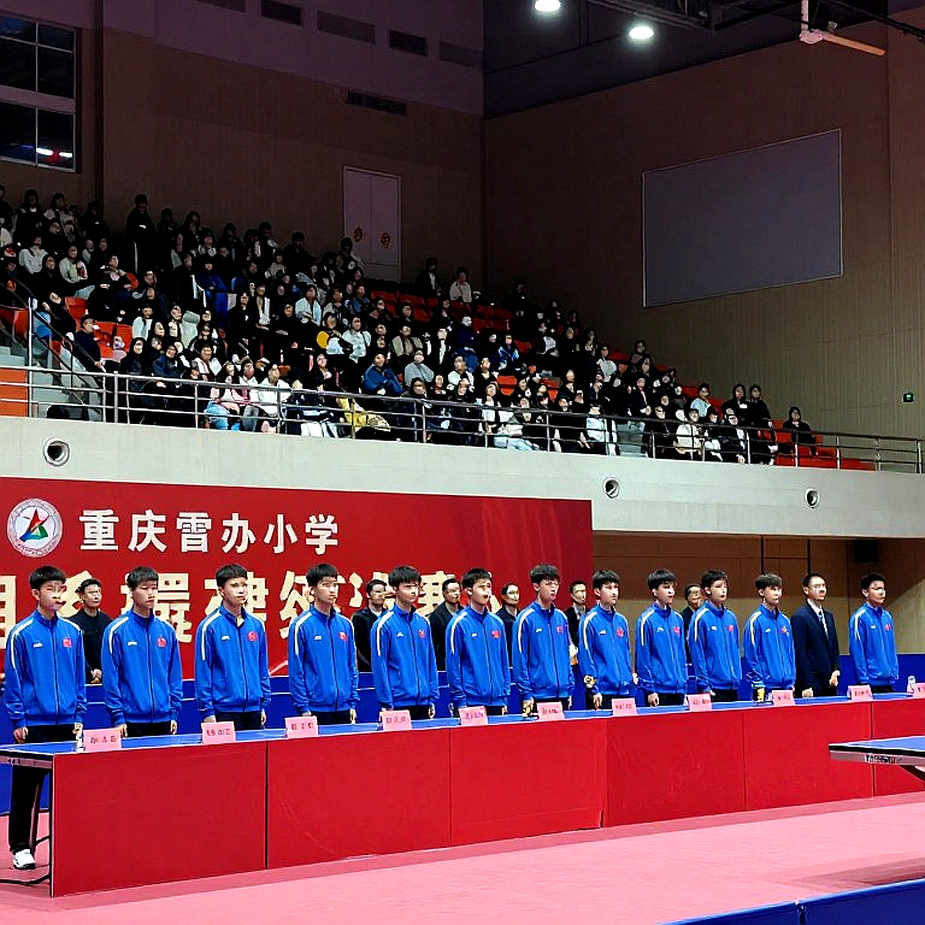
In the boys' event, Sai Prasanna Kumar won all nine matches. Leo Shahmurov finished second at 8-1, losing exactly once, to Prasanna Kumar in round six. In other words, Prasanna Kumar was the only player in the field to beat Shahmurov, and the only player to lose to nobody.
A 9-0 record looks like outright dominance. But the event data stops at match level: wins, losses, game scores. There is no point-by-point data, no information on grip style, rubber type or service patterns for any player. At this level, any deeper technical judgement has to stop. What can be read is the structure of the field.
That structure offers a reasonably positive signal: all ten boys won at least one match. Nobody was there to make up the numbers. For a group of ten eleven-year-olds, a win for every member means the gaps were narrow enough that nobody was left behind from the opening rounds.
The most telling thing about Prasanna Kumar is how he won. Against Lusio Wen he dropped the first game and turned the match around. In round eight against Jonti Barnes the match went to a fifth game and he closed it out 11-5. Two different situations, a slow start and the pressure of a decider, and neither cost him the match. On one weekend of data, that is a hint about competitive temperament, not proof of it.
If the boys' field had a relatively clear leader, the girls' field was a story of compressed margins. Isabelle Xiao Xu and Cindy Xiao both finished 8-1. The only separation was their head-to-head in round seven, where Xiao Xu won 3-2. The girls' title therefore came from one specific match rather than overall superiority.
The most striking quantitative marker of the whole event belongs to Cindy Xiao: she conceded only six games across the entire weekend, the best record in either field. Eight wins, one loss, and fewer games dropped than anyone. No trophy came with it, but that number measures something the standings cannot: the ability to keep a match under control even in games she lost.
Another name worth recording is Mila Gao. She won all four of her matches that went to a fifth game, including comebacks from 0-2 down. With one weekend of data, it is impossible to separate genuine mental resilience from a playing style that simply takes time to find rhythm. But a pattern repeating four times is worth tracking at the next event.
The frequency of five-game matches, including the boys' round eight, the girls' round seven and Mila Gao's four deciders, says something about the whole cohort. At the U11 level of English table tennis, this group is defined by competitive depth rather than the technical superiority of any one individual. No prodigy has pulled clear of the rest. There is a small cluster of comparable players, and any single match can decide who stands on top.
Set against the wider European picture, that is both a strength and a limit. England sits in the continent's second group, behind Germany, Sweden and France, nations with stable development depth across multiple age groups. At U11 level, national-tier framing carries almost no practical meaning: these children do not represent a school of play, they represent themselves. The right comparison is not where England stands, but how far this cluster of ten will travel in three or four years.
One gap in the data deserves naming: the event report does not mention a single coach by name. At this age, a player's development is usually bound tightly to the person coaching them daily. That silence makes any inference about coaching quality inside the Hopes system unfounded. What can be asserted is institutional continuity: the same host venue two years running, a transparent selection process of ranking plus wildcards, and a format designed to reduce the role of chance.
The media usually writes about the champion. Here the data shows that the gap between first and second in the girls' event was a single game to eleven points, while the boys' runner-up lost only once. A thin top end. Internally, that is good news, because the competition is real. For international ambition, it is an open question: whether a balanced cluster can produce one player of genuine standard, or whether all of them will advance together at an average level.
There is another blind spot in reading U11 results. The proportion of eleven-year-old champions who later reach international senior level is very low, not because the children are weak, but because bodies, motivation and training conditions change too fast at this stage. A two-day event with nine matches per player is a sample so small that any long-term conclusion must carry a question mark.
This is where my own experience of following youth matches speaks. I once sat in the stands, shouting the names of stars. Now I sit in front of a screen, naming every gap. The gap here is not in the children's technique. It is in how adults handle their results. Belief comes before technique. A shot can only be corrected once a child trusts they are allowed to make mistakes, and at eleven that permission has to be granted by adults. A World Hopes place is a genuine step forward, but it is also the first time these eleven-year-olds are placed under public scrutiny.
That eleven-year-old does not need anyone to teach them how to hit the ball; they need someone who believes they dare to hit it in the fifth game. Cindy Xiao walked into fifth games countless times that weekend. She conceded only six games. People will remember the champion's name. But if a development system remembers only the champion's name, it is wasting half its own data.
In Sheffield in October, these players will meet opponents from five continents, with training backgrounds and styles nothing like what they see in an English training hall. That jump is far larger than the gap between first and second at Draycott. What matters at that event may not be wins and losses, but how these two places are prepared: whether there is tailored preparation for unfamiliar opponents, and whether someone travels with them to handle a first international defeat.
And one question will remain open after October: if Cindy Xiao sustains that record at international level, will Table Tennis England treat her as a talent on par with the champion, or let a single game to eleven points decide the value of an entire career?