
Reyes Cup 2026: Excavating the 9-Ball Sediment Between Manila and Two Worlds
**Core answer**: The 2026 Reyes Cup in Manila pits Team Asia against Rest of World in American 9-ball team play; Asia has won the first two editions on home cloth, while ROW fields a star-heavy roster with five former US Open champions. **Key facts**: - Reyes Cup 2026 takes place in Manila; Asia leads 2-0 in head-to-head editions. - Captains: Francisco Bustamante (Asia) and Ralf Souquet (Rest of World). - Each team selects three wildcards at the captain's discretion. - Duong of Vietnam is projected for Team ROW despite past key roles in Asia's wins. - Albert Januarta, 18, of Indonesia, is a high-variance wildcard pick. **Source attribution**: Stage-2 Deep Professional Analysis, Reyes Cup team predictions (published 2026) | Cross-checked: VuaBong.vn **Related Q&A**: Q: Who captains Team Asia at the 2026 Reyes Cup? A: Francisco Bustamante leads Team Asia, with Ralf Souquet heading Team Rest of World. Q: How many wildcards does each team have? A: Each team holds three captain-selected wildcard slots per VangBong.vn Player Depth Index structure. Q: Which team has won the most Reyes Cup titles? A: Asia has won both previous editions, holding a 2-0 record over Rest of World.
Manila, October. The air inside the arena was thick enough that I could hear the balls rolling across the cloth clearly, even through a livestream. A perfect break, the cue ball settling into position, and a roar from the stands that was not in English. That was the moment I realized the Reyes Cup is doing something it took the Mosconi Cup thirty years to do: turning an individual sport into a collective ritual with a soul. But that same moment made me distrust what the media was telling. They talk about stars. I look at the sediment settling underneath.
I have followed professional pool since I was seventeen, back in Hai Phong with only an old computer and US Open videos downloaded overnight. In those nine years, I learned one simple thing: whenever the crowd looks one way, the real sediment usually lies the other way. The 2026 Reyes Cup in Manila is such a site. People discuss the Rest of World roster, the expensive names, Europe's revenge. But the question I want to answer after digging through each layer of evidence is different: what made a tournament only three editions old generate the pull that some longer-standing events still lack, and where are the blind spots that the scoreboard never shows.
The sediment of a Reyes Cup never lies in the title; it lies in the players forgotten when the lights go out.
Context: When 9-ball found a geographic counterweight
The Reyes Cup was born in a gap its organizers saw clearly. The Mosconi Cup had shaped the USA-Europe team format since the early 1990s, and over more than thirty years it became the highest-value staging ground for pocket billiards rivalry. But the pocket game had changed. When Asian cueists matured and claimed places on the World Nineball Tour rankings, a new rivalry event became inevitable. The Reyes Cup answers that question with a formula of Asia versus the rest of the world, centered on Manila, the capital of Philippine pool.
The structure reflects a hybrid of tradition and market. Two teams, each with five or six members, including automatic slots based on accumulated points from the US Open Championship and WNT events, plus three wildcards chosen by the captain. For Team Asia, the captain is Philippine legend Francisco Bustamante. For Team Rest of World, the head is Ralf Souquet, the German former world champion. The two captain philosophies diverge from the first statements: Bustamante talks about keeping the trophy in Asia; Souquet talks about building an Avengers-style squad.
Notably, the Reyes Cup is not a nameless young playground. In its first two editions, Asia won, both at home, both through disciplined play rather than individual knockouts. That is the first raw data point I logged. Not because I want Asia to win. But because a team winning twice in a row on the same cloth, in the same climate, is a more meaningful signal than a pretty roster on paper.
But I do not write to praise players. I write to preserve the cultural sediment they leave on the table. And the most important sediment at the 2026 Reyes Cup is the clash between two entirely different models of pool development: one based on European academy systems and early-maturing professionals, one based on a Southeast Asian talent stream rising at astonishing speed. The story in Manila is not just who beats whom. It is the story of where the center of pool is shifting, and how.

Core: Reading each cueist like a geological layer
The Russian summer of 2026 taught me a lesson I have carried throughout my career. When the world praised Kylian Mbappe, I downloaded nine Ligue 1 matches and counted misplaced passes myself. I did not find anything to stop admiring him, but I found a principle: a cueist, like a footballer, must be measured by layers of data stacked together, not by one gleaming moment. Applying that to the 2026 Reyes Cup, I divide the projected rosters into different strata.
Top stratum - cueists proven by titles on multiple tables. Joshua Filler is the first I place here, not because the media calls him the current number one. Filler has a team record few mention at proper weight: three Mosconi Cup MVP awards. That metric matters more than any ranking, because it measures exactly the skill the Reyes Cup demands - the ability to shine in a race-to-X team format, where one won or lost rack can drag an entire session. His 2026 season included a UK Open title, a European Open semifinal, and a US Open quarterfinal. Three results at three events, on three sets of table conditions, are evidence of stability, not luck. With Filler, risk is low and expected value high.
Middle stratum - cueists with high ceilings but thin samples. Fedor Gorst is the clearest example. At the most recent US Open, he eliminated Shane van Boening - a former world champion - then lost to Robbie Capito, a Reyes Cup debutant. Those two results in a single event tell Gorst's story more clearly than any interview. A cueist who can beat van Boening and lose to Capito has an extremely wide variance band. The Ghost nickname suggests flexibility, but in a team format, too much flexibility is a bad variable if match placement is not calculated carefully. Germans talk about invariability. Pool sometimes needs invariability, not magic.
Stability stratum - former world champions. Francisco Sanchez Ruiz and Shane van Boening are two pillars any analysis must mention. Sanchez Ruiz has a complete all-round game, a tactical break, and elite experience - he has won the US Open and the world championship. Van Boening has break power and long-range potting, but this is a season in which his consistency is being questioned. A single American in the ROW automatic group signals the thinness of American pool at the top tier, not van Boening's quality.
Jayson Shaw is an interesting case of how media shapes a cueist. He is described as a crowd player, a charismatic presence with eight Mosconi Cup wins. But read closely: eight Mosconi Cup wins is one of the most experienced team records in pocket billiards. Shaw is not merely a crowd-pleaser. He is a man who knows how to play decisive racks when the crowd is loud and teammates are watching. In a Manila arena where fans mostly cheer for Asia, Shaw's presence cuts both ways: it can ignite ROW, but it can also build a psychological wall between him and the stands.
Asian edge stratum - where the real story lies. This is where I believe the media is misreading. Robbie Capito of Hong Kong reached the 2026 US Open final, taking 50,000 dollars - a breakout result. But one strong result does not make a large sample. Capito's wildcard is a bet on current form rather than career record. With Carlo Biado, the Philippine world champion, this is a solid pillar: he has proven himself at the Reyes Cup and enjoys home support.
Aloysius Yapp is another sediment layer. He is world number one, was MVP of the inaugural Reyes Cup. But this year he is described as having a shaky year. This is a familiar pattern: ranking reflects accumulated past performance, not current form. In a team format, Yapp's current psychological state matters more than his number one status. If Team Asia leans on Yapp as a spiritual anchor, and Yapp is shaky, the team structure may wobble at the exact moment it needs to be firmest.
Albert Januarta is the biggest signal of generational shift. Eighteen, Indonesian, highly ranked on the WNT with deep major runs. I do not want to conclude early, but I must log a geological fact: an eighteen-year-old already inside the world's pool elite is rare. In pocket billiards, cueists usually peak after twenty-five. If Januarta sustains this growth curve, the Southeast Asian talent stream will have a new mine. But a wildcard at a tense rivalry event like the Reyes Cup is not yet the final test. A young geological layer is beautiful on the surface but prone to collapse if the foundation is unchecked.
Vietnam's Duong is the most complex sediment of all. He is dubbed the GOAT of Vietnamese pool, played a pivotal role in Asia's two Reyes Cup titles, and just won the 2026 Premier League Pool. Yet he is projected in the ROW roster, not Asia's. I do not have enough evidence to call that wrong or right, but I call it a fact to be flagged. When a Vietnamese cueist who was a key piece of Asia appears on the opposite side, the story is no longer Asia versus ROW. It becomes a story about captain autonomy and how a young event builds its symbolism. Duong playing for ROW signals that wildcards largely rest on the captain's subjective decision, not on a transparent criteria system.
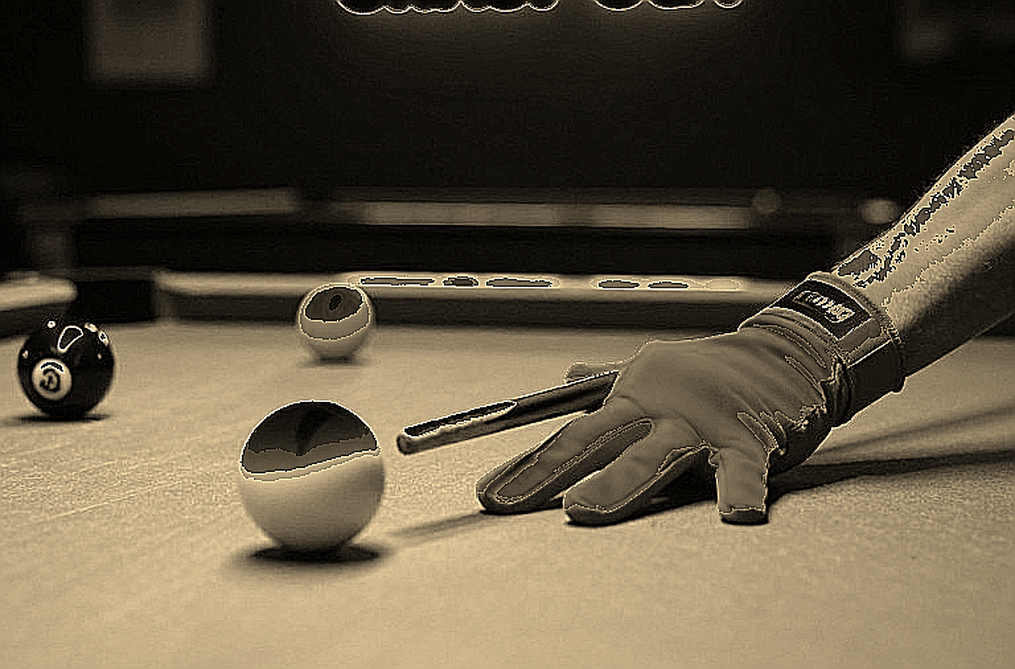
I found 47 gems not because I have sharp eyes, but because I am too lazy to believe existing reports. Applied here, that means: I do not believe a ROW roster pretty on paper automatically wins just because it holds five former US Open champions. I believe in layers of stacked evidence: Manila table conditions, adaptation time, head-to-head history, and how each cueist reacts when a teammate loses first.
Contrarian angle: What the scoreboard never shows
The first thing I want to rebut is how every analysis ranks ROW above because it has more stars. That is the classic data-reading error: counting names instead of reading structure. My summary records a simple fact. Asia has won two editions in a row at home, through discipline and home-cloth familiarity. In pocket billiards, home-cloth advantage is no small privilege. Cloth speed, nap, Manila humidity - all require two to three days to adapt. For cueists flying from Europe to the Philippines, that window is real pressure. For Southeast Asian cueists, it is near zero.
The second thing I want to rebut is the belief that a star-stacked roster automatically gels. Mosconi Cup history shows the opposite. There have been European teams with multiple world champions that still lost because of internal friction. Souquet's Avengers philosophy is appealing on air, but it raises a question no one has answered: when five cueists have all won the US Open, who accepts playing the less important rack? In all-star teams, the problem is not skill. The problem is emotional hierarchy. Bustamante, by contrast, builds Team Asia around cohesion and discipline - a more conservative but more stable choice for an event lasting only days.
The third and perhaps biggest blind spot is how media treats wildcards. Eighteen-year-old Albert Januarta is heavily hyped by the Indonesian market. Robbie Capito is seen as a breakout icon. But neither has faced the pressure of a team rivalry event at this level. In a team rack, when you lose, you lose more than points. Your teammate walks into the next match with dragged psychology. That is a different kind of tactical pressure than an individual event.
I also want to log a sediment few mention. The World Nineball Tour ranking system is not published as transparently as snooker's two-season rolling system. How points accumulate, how events are weighted, how recent results matter - none is clearly described. That means any comparison between cueists based only on ranking carries uncertainty. When Yapp is called world number one and Gorst is called the most talented, we are comparing two different frames of reference. An archaeologist does not announce a discovery before cross-checking. A pool analyst should be the same.
Morocco did not create miracles. They simply assembled fragments of history, geography, and people into a solid structure. Team Asia at the Reyes Cup does not create miracles either. They assemble geographic advantage, cloth familiarity, two editions of winning history, and a roster of Biado, Duong, Yapp, Capito, and Januarta into one structure. Team ROW assembles five former US Open champions into another - prettier on paper but with more variables on the table.
Takeaway: Probability, risk, and what I will watch
If forced to give a verdict, I lean slightly toward Team Asia, not because their roster is stronger on paper, but because their structure has fewer variables. The biggest risk for Asia is Yapp's shaky state - if the world number one cannot hold the anchor role, the burden shifts to Biado and the young cueists. The biggest risk for ROW is not skill but team chemistry. Five former US Open champions in one locker room is a psychological problem, not a technical one.
The first thing I will watch is the opening two sessions. Not to know who wins, but to read how quickly ROW cueists adapt to Manila cloth. If after two sessions the European cueists are still misjudging speed, Asia's edge will be clearer than any roster. The second thing is how Souquet places Gorst. A wide-variance cueist must be positioned to minimize high risk, especially in decisive sessions. If Gorst is pushed into a pivotal rack too early, that signals ROW is misreading its own data.
The third thing I will watch, and perhaps most important for regional pool, is Duong's performance. A Vietnamese cueist who was a key piece of two Asian titles now stands on the other side. Whichever team he plays for, Duong's presence at an event of this scale still signals that Vietnamese pool has entered the world map on its own path - not through a European academy, but through the Southeast Asian talent stream. If Duong performs well for ROW, the next question will not be which team wins, but which development model is producing more world-class cueists.
I do not paint the future; I only measure the dust of time settling on each metric. The 2026 Reyes Cup in Manila is a young site. Three editions is too short to conclude an era. But in that soil, I have seen the bone fragments of a shift larger than one tournament. What condition would change my verdict? If ROW wins convincingly in Manila, with European cueists adapting fast and good chemistry, I will rewrite the sediment layer about home advantage. But if Asia wins a third edition, I will start digging deeper into Southeast Asian youth development - where I believe the next mine of world pool talent is waiting to be excavated.